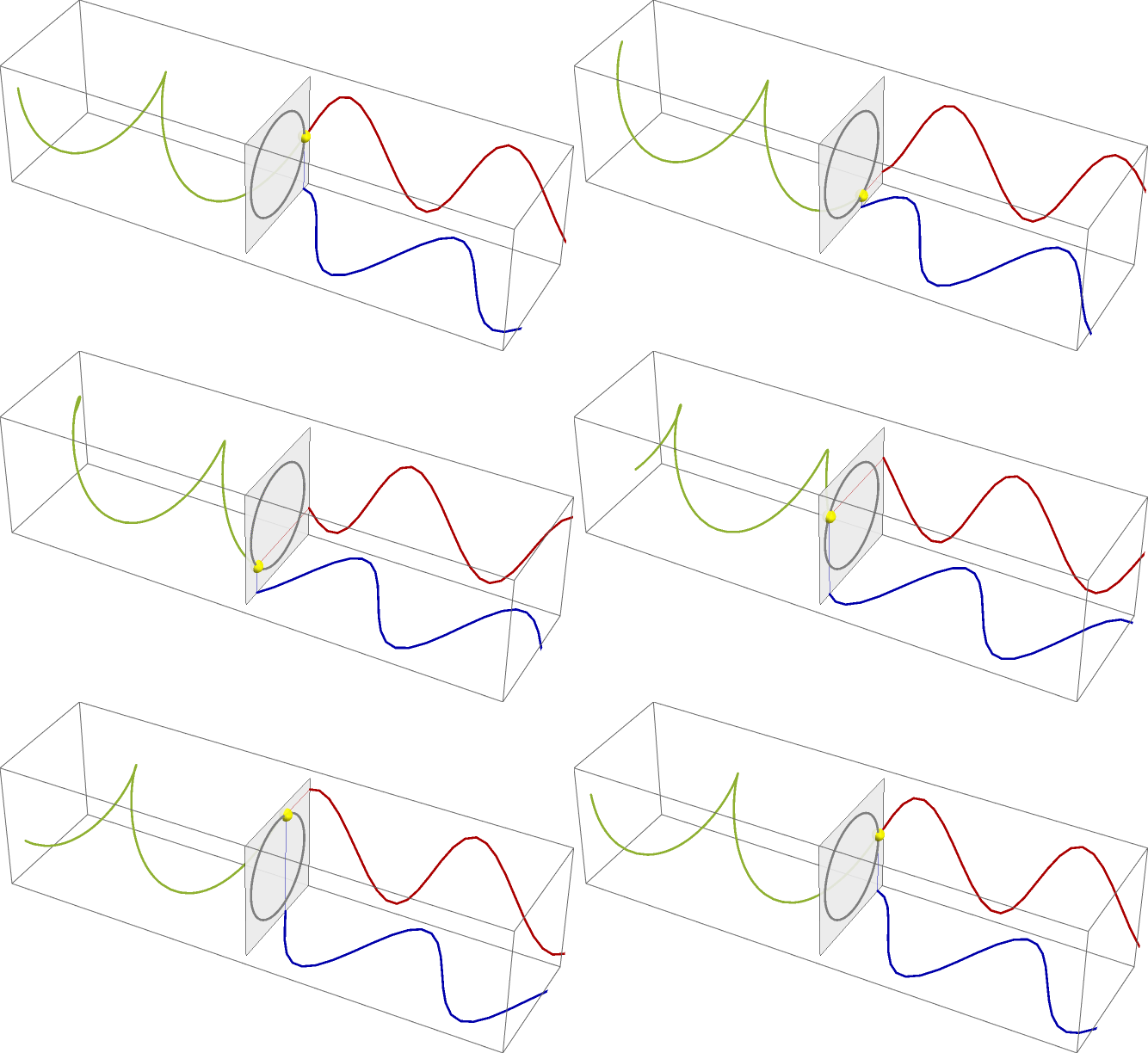
Abstract In contemporary physics, space is typically assumed to be a continuous, homogeneous, and passive background upon which physical processes occur. This implicit assumption has fundamentally limited our understanding of deep physical questions, notably the nature and origin of fundamental physical constants. In this paper, we challenge this prevalent view and propose that space is neither a mere passive background nor inherently continuous, but rather an emergent, structured existence arising synchronously with mass-bearing entities (matter). We introduce the concept of “rotational progression,” a potential structural mode of spatial unfolding, and discuss its implications for various physical phenomena and constants.
Introduction
Classical Newtonian physics and even modern frameworks such as quantum mechanics and the Standard Model implicitly treat space as an immutable, featureless stage. Although General Relativity introduced the notion that space-time could be curved and dynamically evolving, it retained continuity as an unquestioned fundamental premise. However, recent theoretical impasses — such as the inability to unify quantum mechanics with gravity and the inexplicability of fundamental constants — prompt a re-examination of these underlying assumptions.
Questioning the Hidden Assumption
Mainstream physics implicitly assumes spatial continuity and structural neutrality. Space is traditionally viewed as a passive container for matter and energy, offering no explanatory insight into its own nature or properties. This foundational assumption severely restricts theoretical advances in understanding the origin of fundamental constants, such as the speed of light c, Planck’s constant h, gravitational constant G, and elementary charges.
Space as an Emergent, Structured Existence
In our theoretical framework, space is not an inherent background but emerges synchronously with mass-bearing entities. Rather than preceding matter, space co-arises with matter, manifesting as a second mode of existence dependent upon and defined around matter itself. Thus, space and matter form an inseparable dyad, each giving context and meaning to the other.
Rotational Progression: A Proposed Structural Configuration
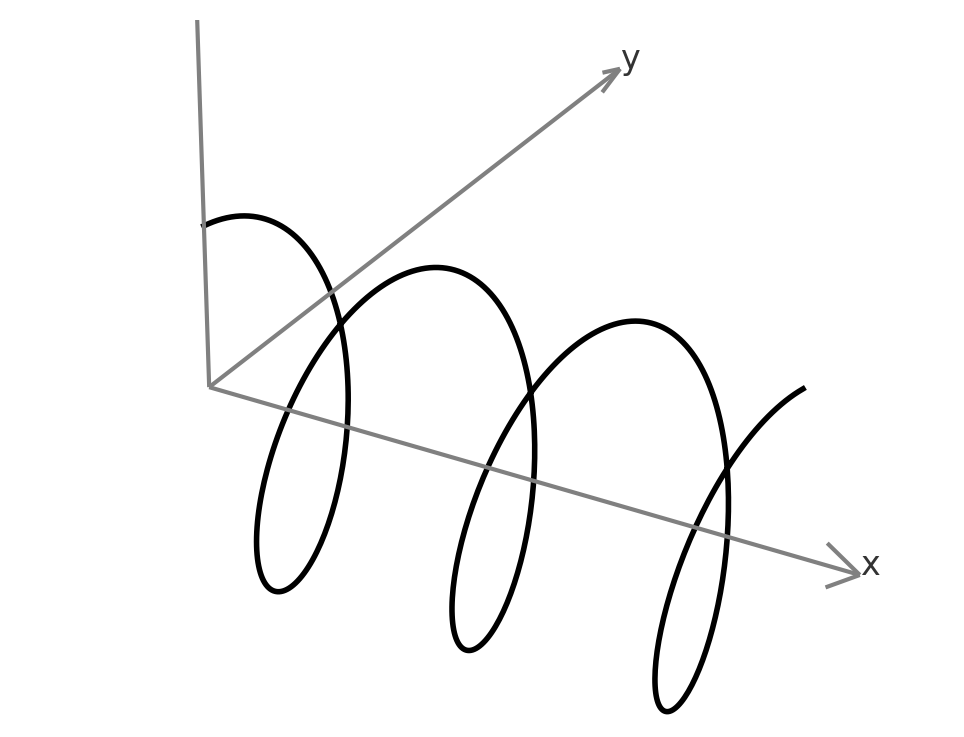
If space emerges and expands from matter, what might be its structural mode of unfolding? We propose a concept termed “rotational progression,” in which spatial extension is not simply radial but intrinsically rhythmic and rotational. Rather than a uniform isotropic expansion, this model suggests that space extends in discrete, structurally defined patterns around matter nodes.
This rotational progression implies that at fundamental scales, spatial structure is rhythmic, quantized, and discrete, rather than continuous. The observed continuity of space at macroscopic scales would thus be an emergent, averaged effect of this underlying structured discrete expansion.
Implications for Physical Phenomena and Constants
Reconceptualizing space as structurally discrete and emergent opens intriguing avenues for interpreting various physical constants and phenomena:
-
Speed of Light c: The universally constant speed may reflect the fundamental rhythm of spatial expansion rather than an intrinsic speed limit in a pre-existing spatial vacuum.
-
Planck Constant h: This quantum of action could naturally emerge from the minimal discrete rhythmic interactions permitted by the structured spatial framework.
-
Gravitational Constant G: Gravity could be reinterpreted as the manifestation of interference patterns resulting from overlapping spatial expansions of mass-bearing nodes.
-
Elementary Charge and Quantum States: Stability of quantum states and discrete electric charge could reflect stable, harmonic resonance patterns within the rotational progression of emergent space.
Conclusion: A New Direction for Physical Inquiry
By explicitly considering space as structured, emergent, and defined around matter nodes, we gain a powerful conceptual tool capable of potentially unifying disparate physical constants and phenomena. This approach invites further exploration into the intrinsic nature of space itself, shifting from viewing space as passive to recognizing it as dynamically participatory. Future research along this trajectory holds the promise of deeper insights into foundational physics, unlocking long-standing mysteries by reframing our fundamental understanding of space.